Shenzhen Summit: Why the Trump-Putin-Xi Meeting Won't Be a New 'Yalta'
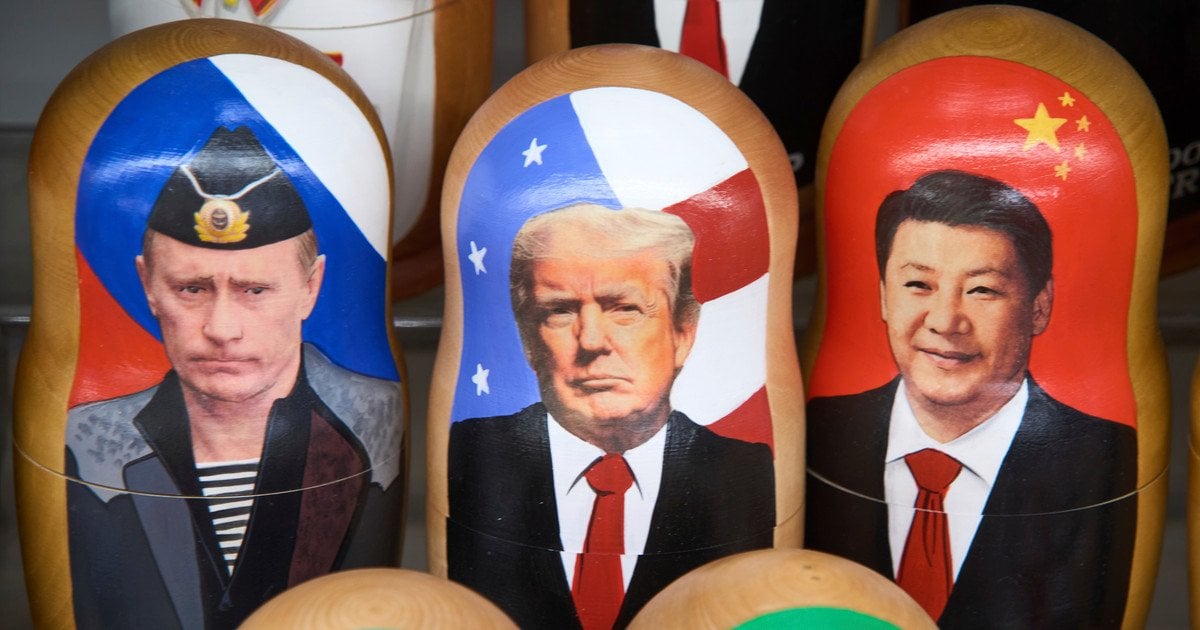
The high-profile meeting between the leaders of the US, Russia, and China on November 19 is expected to be a symbolic photo op rather than a breakthrough for global security.
 🇺🇦Ukraine
Photo: TSN
Key points
- The meeting is scheduled for only one hour, limiting its potential for real diplomacy.
- Key topics include Ukraine, nuclear weapons, and AI regulation.
- Analysts view the summit as a tool for Putin to project international legitimacy.
On Thursday, November 19, Donald Trump, Vladimir Putin, and Xi Jinping are scheduled to hold a trilateral meeting in Shenzhen on the sidelines of the APEC summit. While the event has drawn significant global attention, analysts from The New York Times suggest that the encounter is unlikely to yield substantive agreements on the world's most pressing issues, including the war in Ukraine.
Symbolism Over Substance
Experts are quick to dismiss comparisons to the 1945 Yalta Conference. While Yalta lasted eight days and involved extensive diplomatic preparation, the Shenzhen meeting is expected to last only about an hour. This limited timeframe suggests the event is designed more for public relations and a joint photo session than for resolving deep-seated geopolitical conflicts.
The list of disagreements among the three leaders remains extensive. Major points of friction include the ongoing war in Ukraine, tensions with Iran, China's expanding nuclear arsenal, and the regulation of artificial intelligence and space weaponry. Each leader enters the room with a different priority: Trump focuses on nuclear arms control, Putin seeks to advance Moscow's terms for ending the war, and Xi aims to solidify China's role as a global mediator.
Political Motivations
The meeting offers distinct political advantages for each participant. Donald Trump is looking to demonstrate his international standing following domestic political shifts. For Xi Jinping, hosting the event showcases China's diplomatic weight. However, the stakes are arguably highest for the Russian leader.
"For Putin, participating in the summit is primarily a way to gain international legitimacy," says Alina Polyakova, President of the Center for European Policy Analysis.
Notably, Putin and Xi already held bilateral talks on November 18. Despite these preliminary discussions, the lack of time and the depth of existing contradictions suggest that the Shenzhen summit will not result in the major strategic shifts that many hope for.
Source TSN — tsn.ua/politika/zustrich-trampa-putina-y-si-nyt-poiasnyla-chomu-ne-chek… ↗
Read next
 🏙️City
Electricity Restored in Rivne Region After Russian Attack
Electricity has been restored in the Sarny district of the Rivne region after a Russian attack left over 50 settlements without power.
 🏙️City
Estonia affirms Ukraine's right to self-defense following Gulf of Finland incident
Estonian Foreign Minister Margus Tsahkna stated that the strike on a Russian vessel is a consequence of Russian aggression, reaffirming Ukraine's right to defend itself.
 🛡️Security
Rescue operation in Dymer: 89-year-old woman pulled from rubble
Search and rescue operations continue in Dymer, Kyiv region, following a drone strike. The death toll from the attack has risen to nine.
 👥Society
Russian corvette 'Merkury' in Libya: potential Ukrainian drone strike
An explosion occurred on a Russian warship in the Libyan port of Benghazi, which, according to Associated Press, may have been caused by a Ukrainian maritime drone attack…
 🛡️Security
Russia is testing NATO's defense algorithms through airspace violations, says Dmytro Kashchenko
Retired Ukrainian Colonel Dmytro Kashchenko stated that Russia uses drone and missile incidents over NATO countries to test the reaction speed of air defense systems.
 💡Tech
Scientists revive ancient bacteria from permafrost: climate risks identified
Researchers from the University of Colorado have found that microorganisms frozen for 40,000 years are capable of active growth upon thawing.